

Ferrari F40
NaN%
Estimated Market Price
Ferrari F40 – Enzo Ferrari’s Final Masterpiece
In 1987, Enzo Ferrari, then 89, wanted to mark Ferrari’s 40th anniversary with an uncompromising supercar. The project also answered the challenge posed by the Porsche 959. The result was the F40.
The F40 evolved from five 288 GTO Evoluzione racing prototypes that Ferrari had previously put on hold. Enzo’s brief was simple: keep the car light, keep it fast, and leave out anything that did not serve those goals.
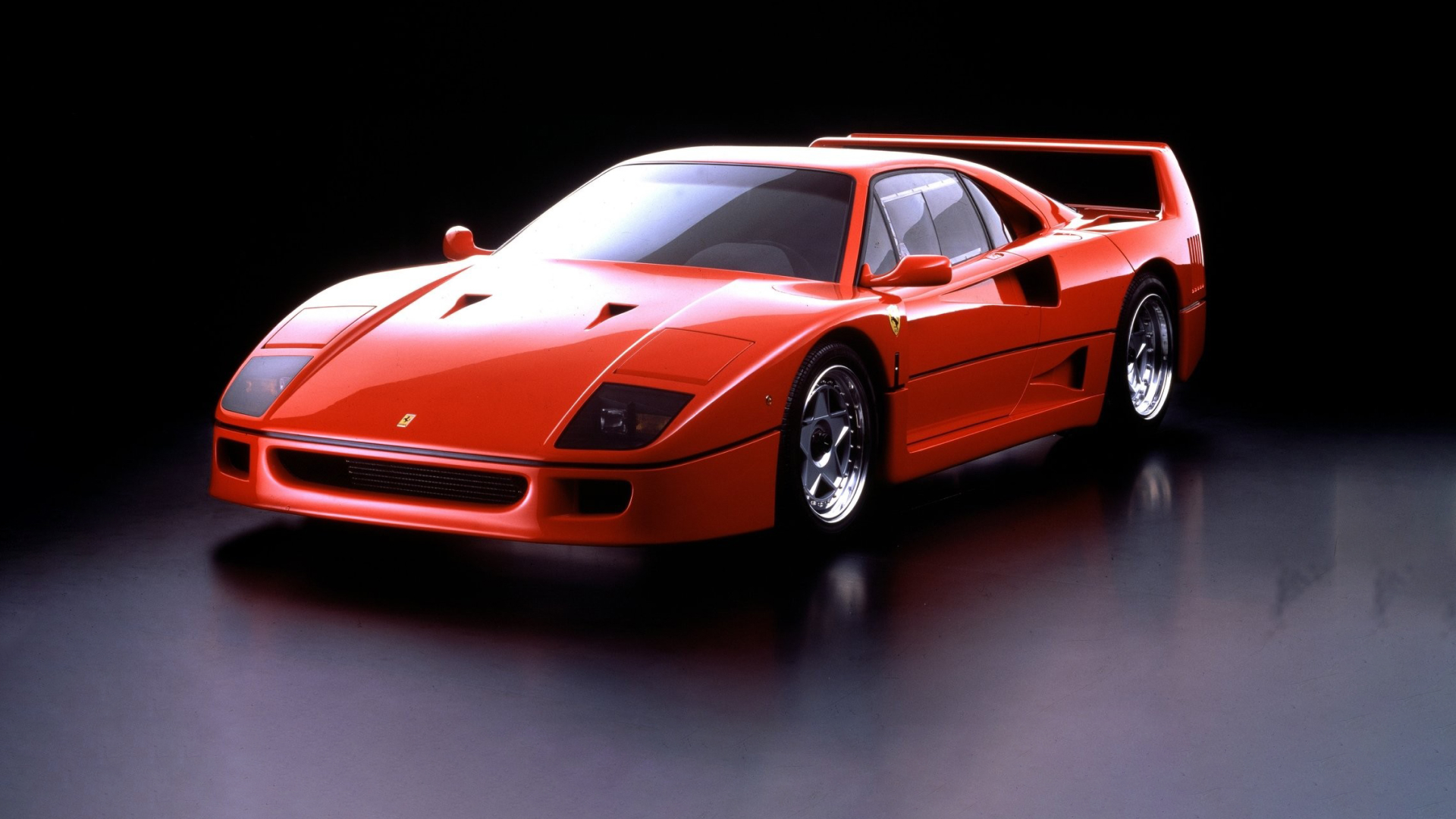
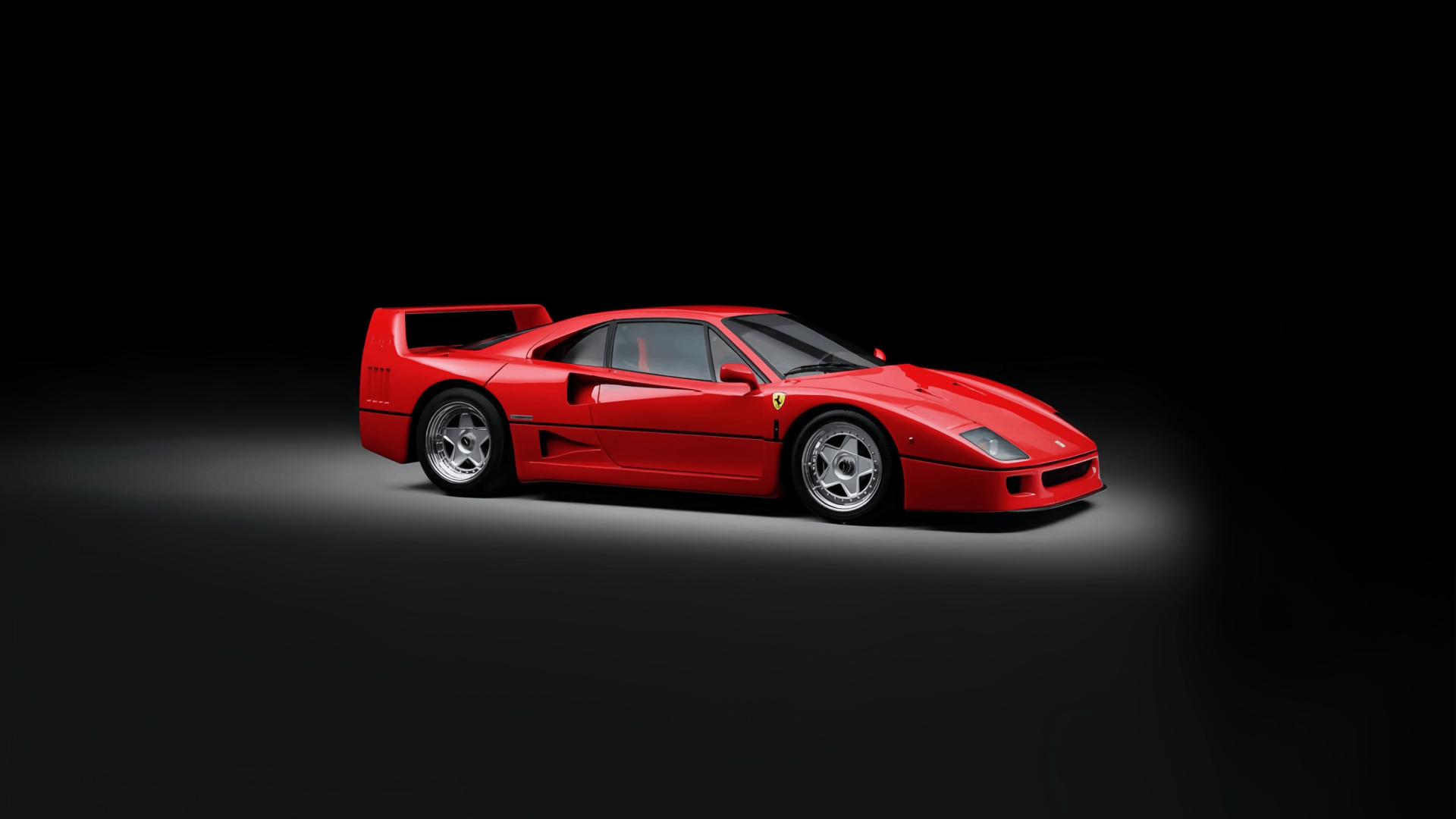
Pininfarina shaped the body with aerodynamics in mind, while carbon fiber and Kevlar composites brought racing materials to a production supercar. The same philosophy continued inside: no conventional door handles, no radio, no air conditioning and, in some versions, no carpet.
Because Ferrari did not need to develop an entirely new chassis, the F40 took just 13 months to reach production. It was unveiled in July 1987, with its name marking Ferrari’s 40th anniversary. Production was initially planned at 400 cars, but demand led Ferrari to increase the run to 1,311.
Ferrari F40 – Enzo Ferrari’s Final Masterpiece
In 1987, Enzo Ferrari, then 89, wanted to mark Ferrari’s 40th anniversary with an uncompromising supercar. The project also answered the challenge posed by the Porsche 959. The result was the F40.
The F40 evolved from five 288 GTO Evoluzione racing prototypes that Ferrari had previously put on hold. Enzo’s brief was simple: keep the car light, keep it fast, and leave out anything that did not serve those goals.
Pininfarina shaped the body with aerodynamics in mind, while carbon fiber and Kevlar composites brought racing materials to a production supercar. The same philosophy continued inside: no conventional door handles, no radio, no air conditioning and, in some versions, no carpet.
Because Ferrari did not need to develop an entirely new chassis, the F40 took just 13 months to reach production. It was unveiled in July 1987, with its name marking Ferrari’s 40th anniversary. Production was initially planned at 400 cars, but demand led Ferrari to increase the run to 1,311.


1987 to 1992
Built to celebrate Ferrari’s 40th anniversary, the F40 was the last Ferrari developed under the direct leadership of Enzo Ferrari. It was also the first Ferrari supercar to exceed 320 km/h, and one of the defining mechanical supercars of the 1980s.
Behind the Legend

1987 to 1992
Built to celebrate Ferrari’s 40th anniversary, the F40 was the last Ferrari developed under the direct leadership of Enzo Ferrari. It was also the first Ferrari supercar to exceed 320 km/h, and one of the defining mechanical supercars of the 1980s.
Exterior and Interior
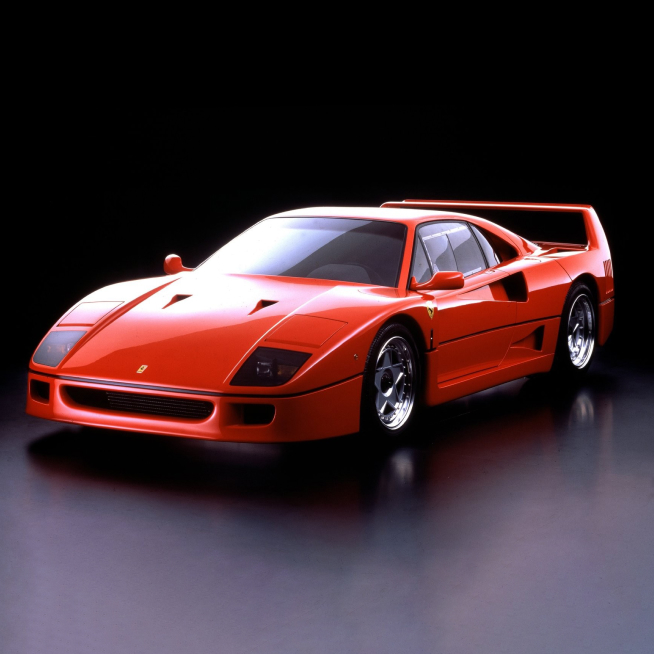
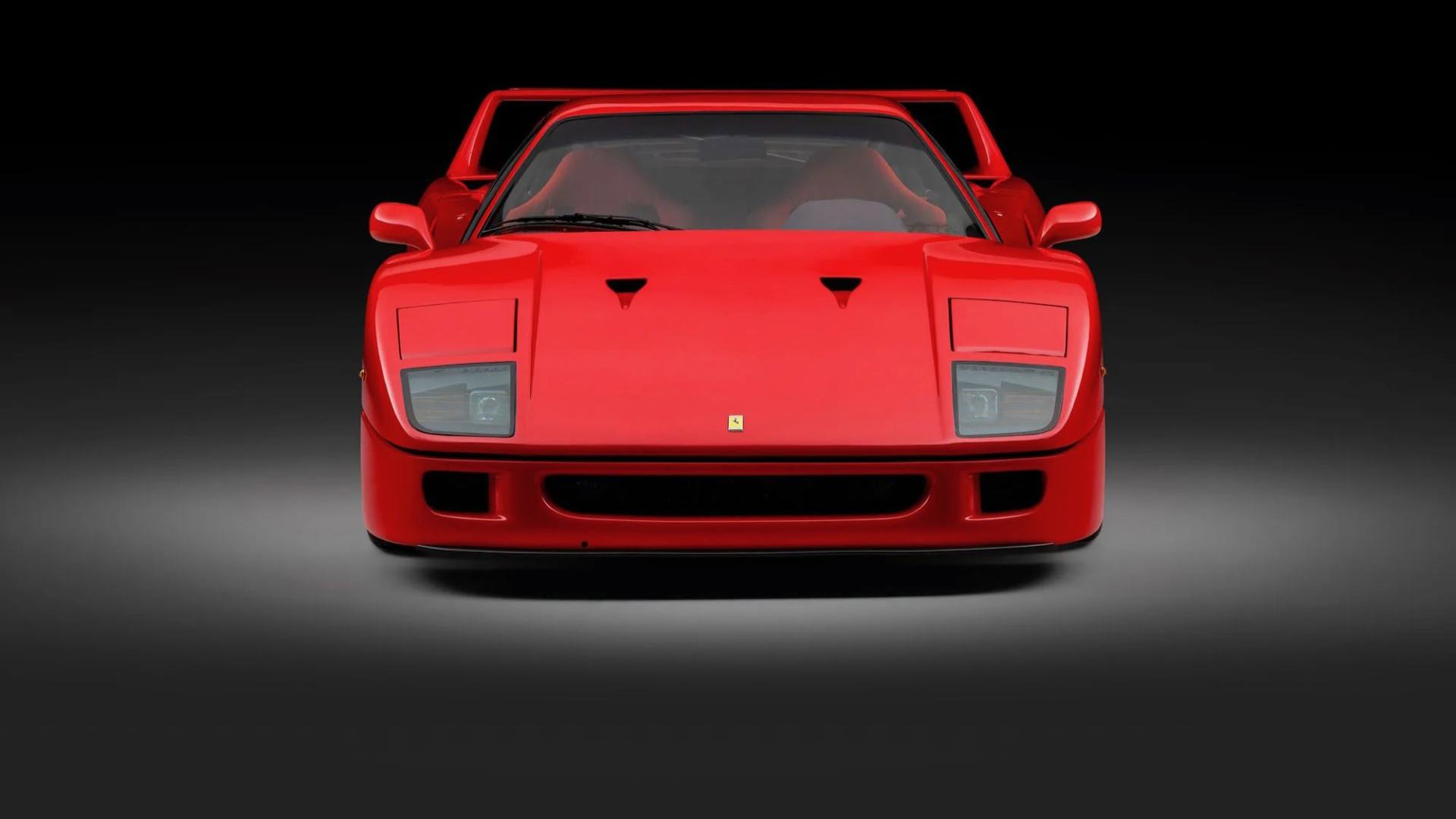
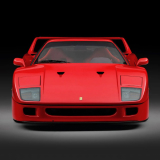
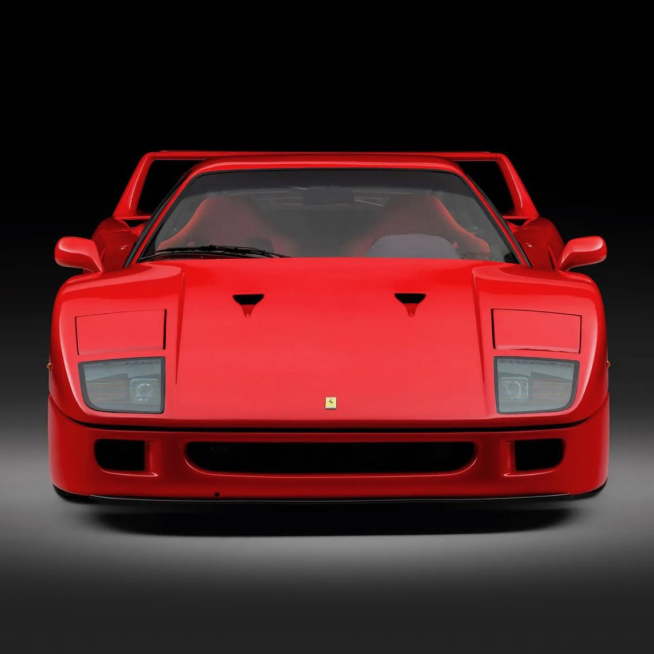
Pop-up headlights
A defining 1980s detail that reduced aerodynamic drag when retracted.
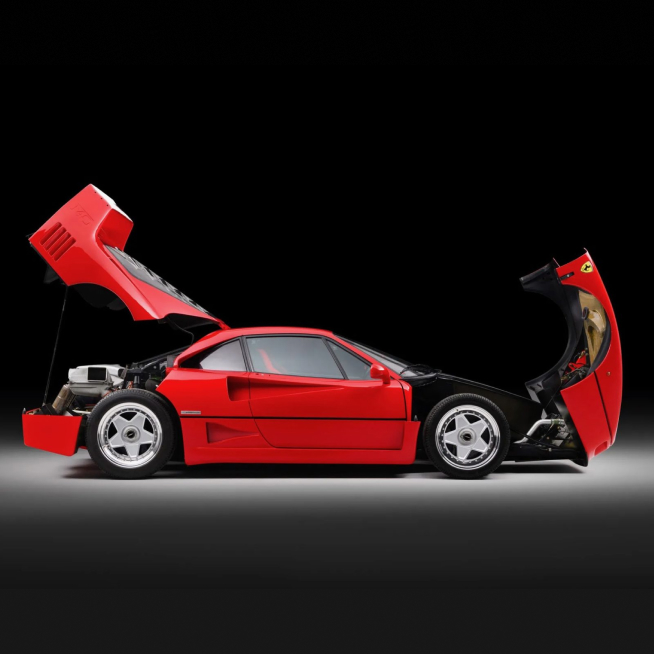
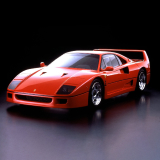
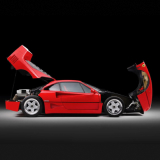
Lightweight composite body
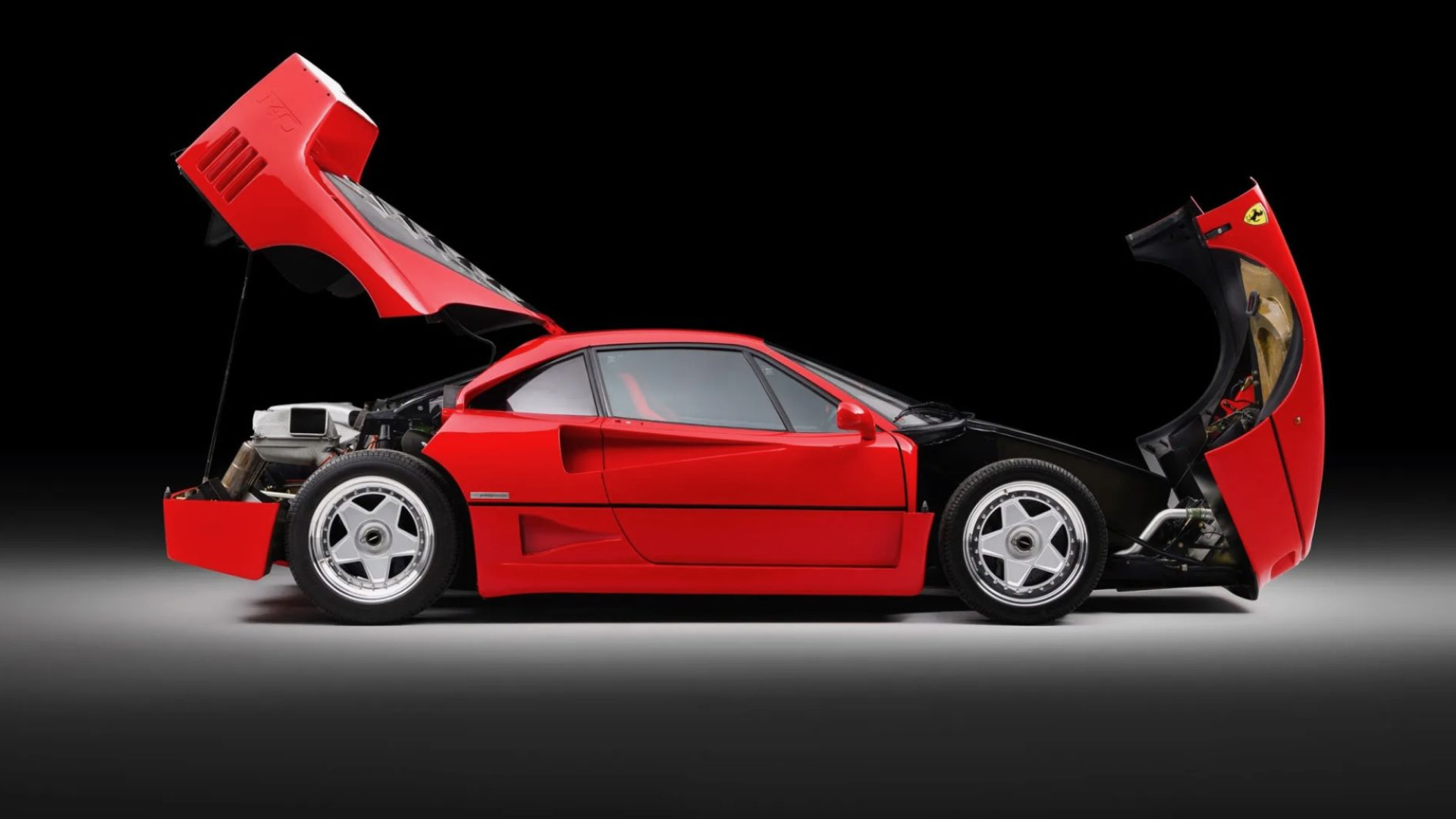
The doors, hood and trunk lid use carbon fiber, while the body shell is made from Kevlar composite. The body is made up of just 11 main components, with little room for decoration.
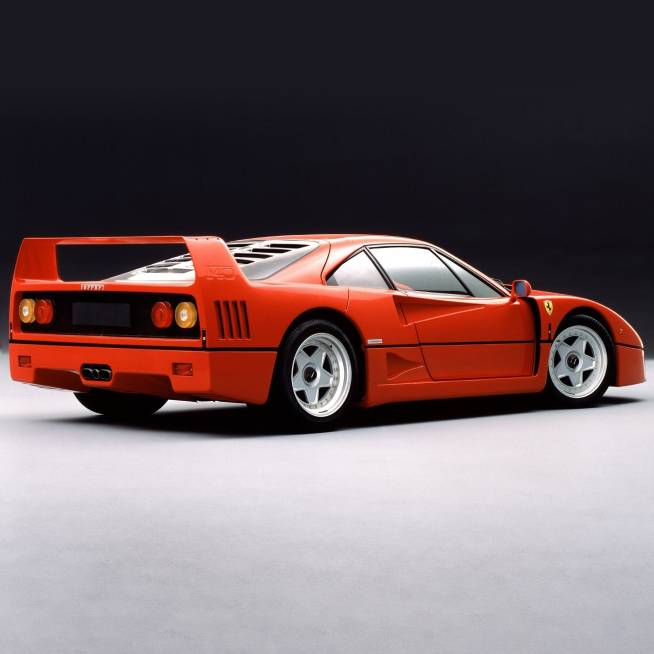
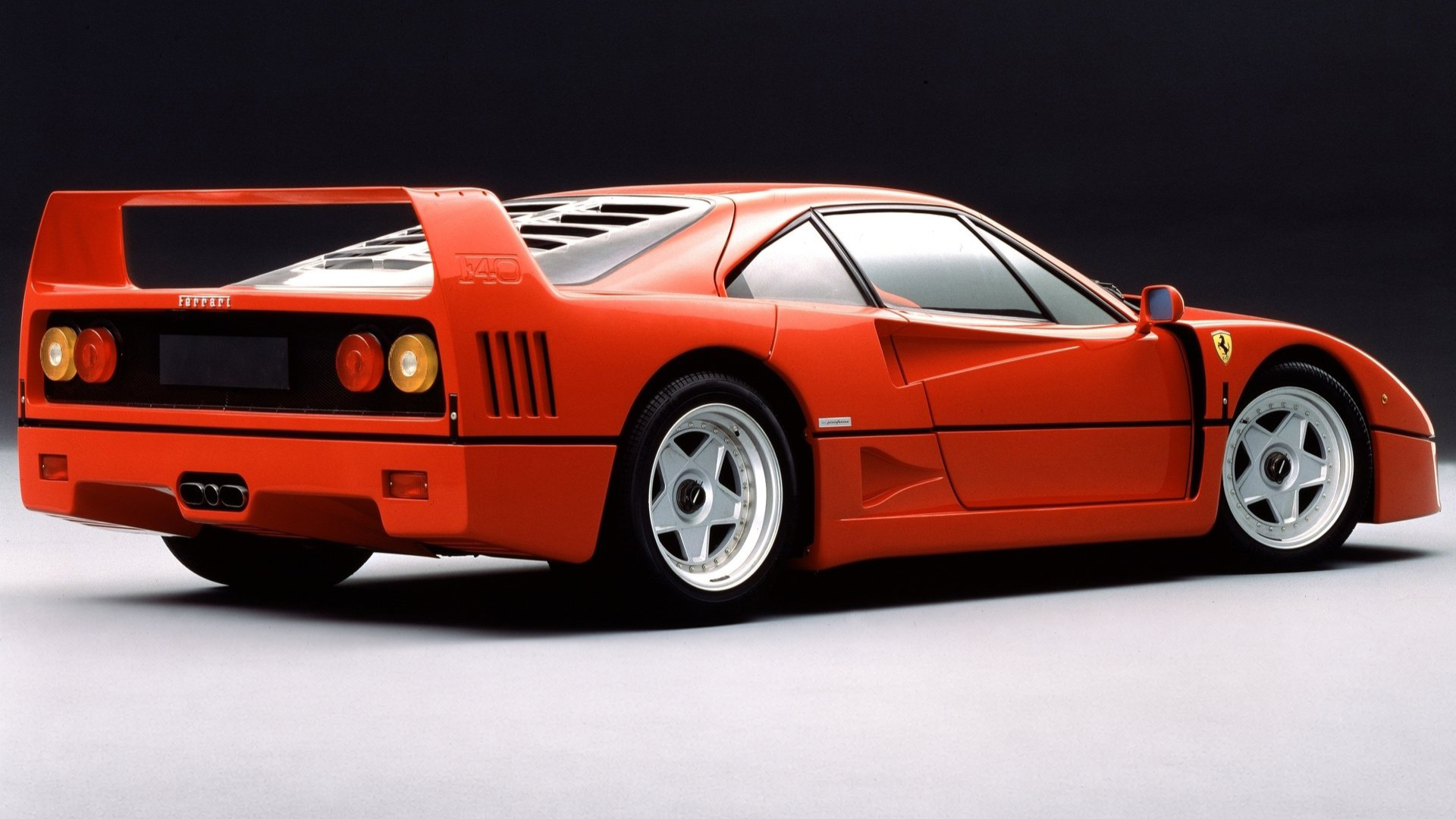
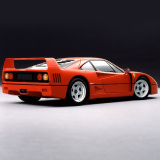
High-mounted rear wing
The F40’s signature wing generates downforce while giving the car its unmistakable silhouette.
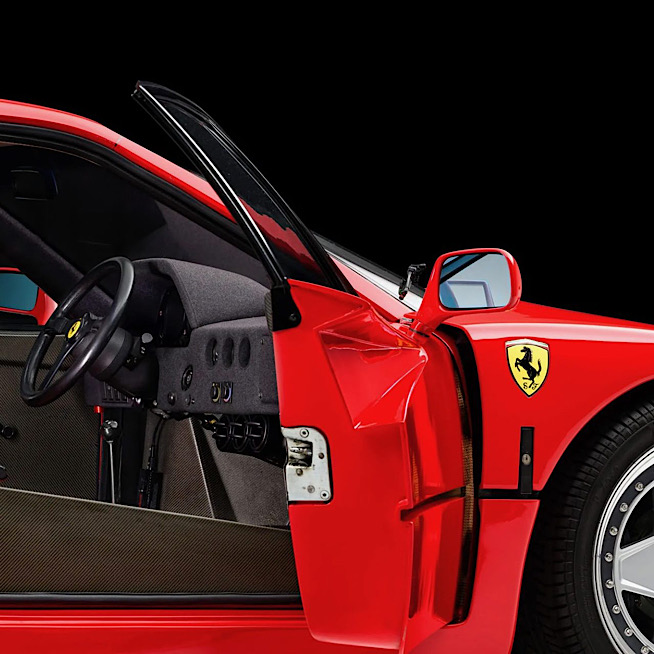
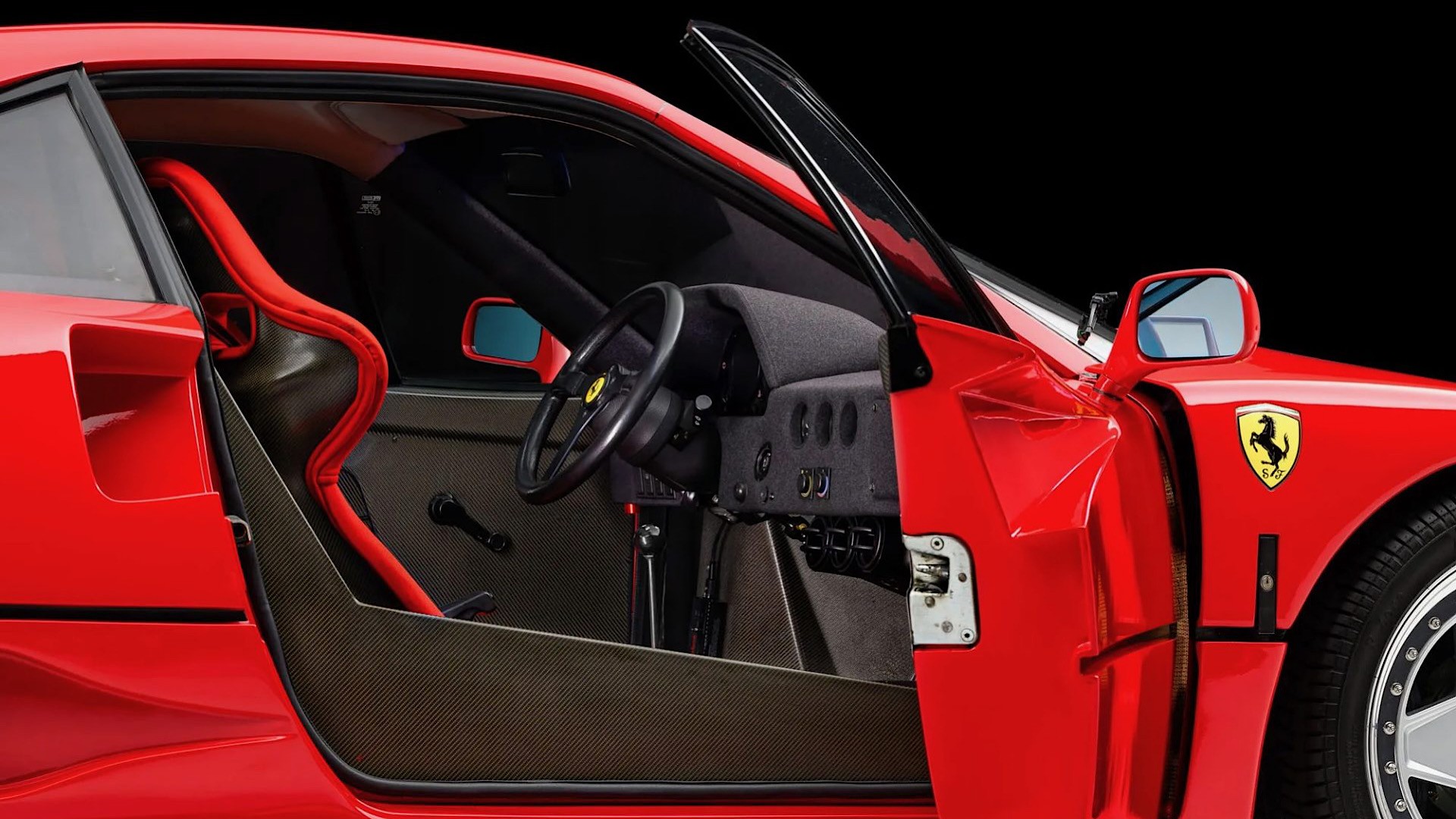
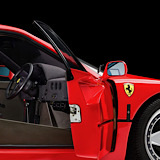
Cable-operated doors
A simple cable mechanism replaces conventional door hardware, another small but telling example of the F40’s obsession with saving weight.
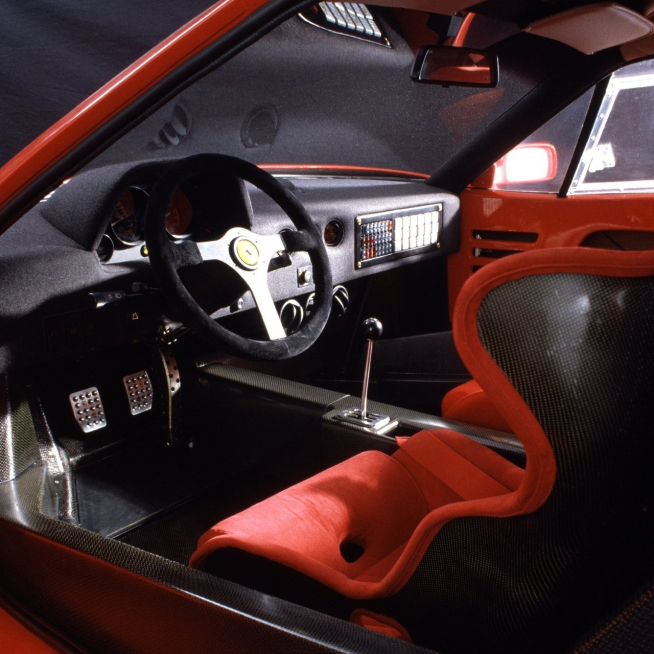
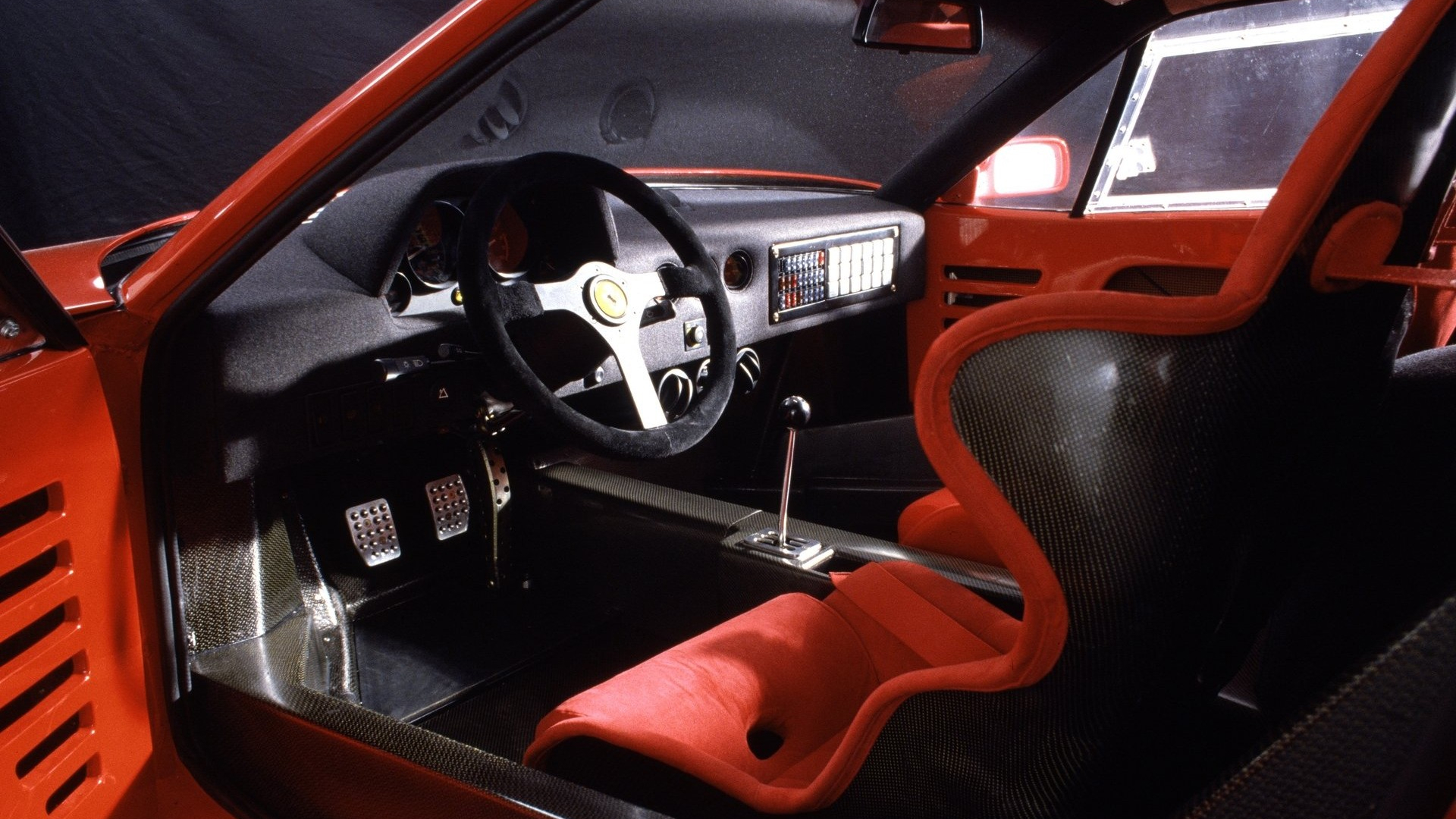
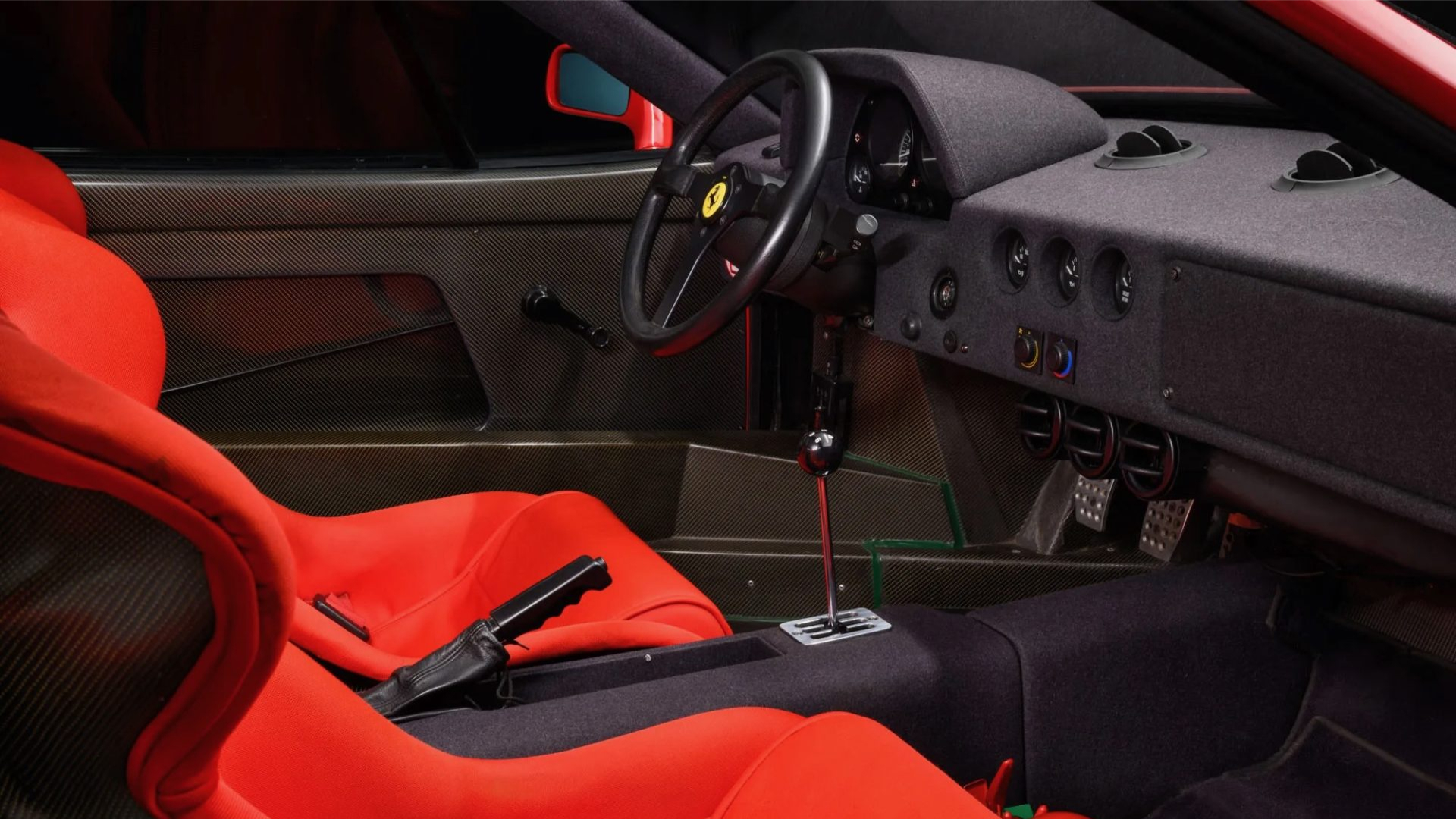
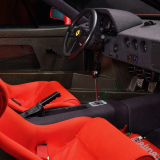
Ultra-lightweight interior
Exposed carbon-fiber door shells replace conventional panels. There is no radio, air conditioning or center console, and some versions even omitted floor mats.
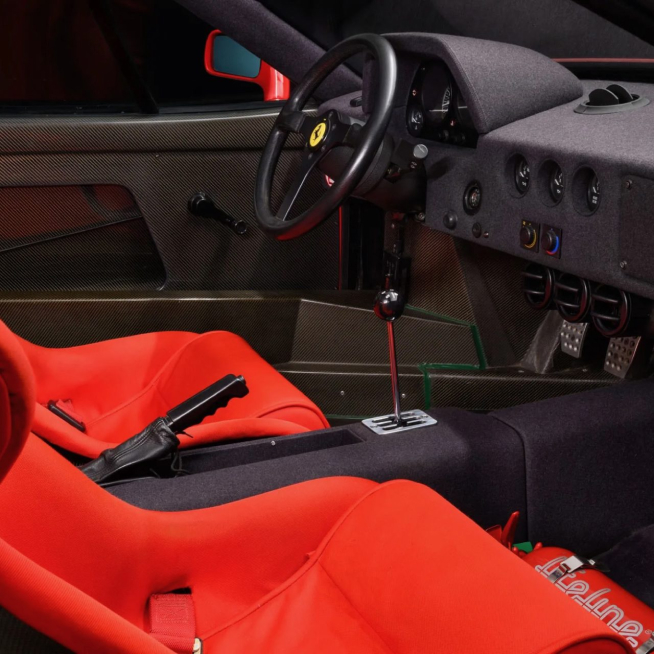
Carbon-fiber bucket seats
Trimmed in fire-resistant Nomex fabric, the seats use manual adjustment rather than electric motors.
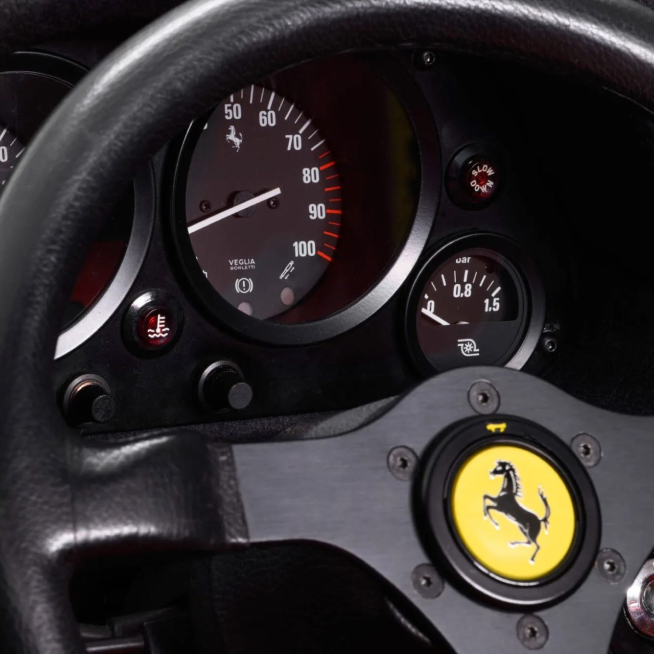
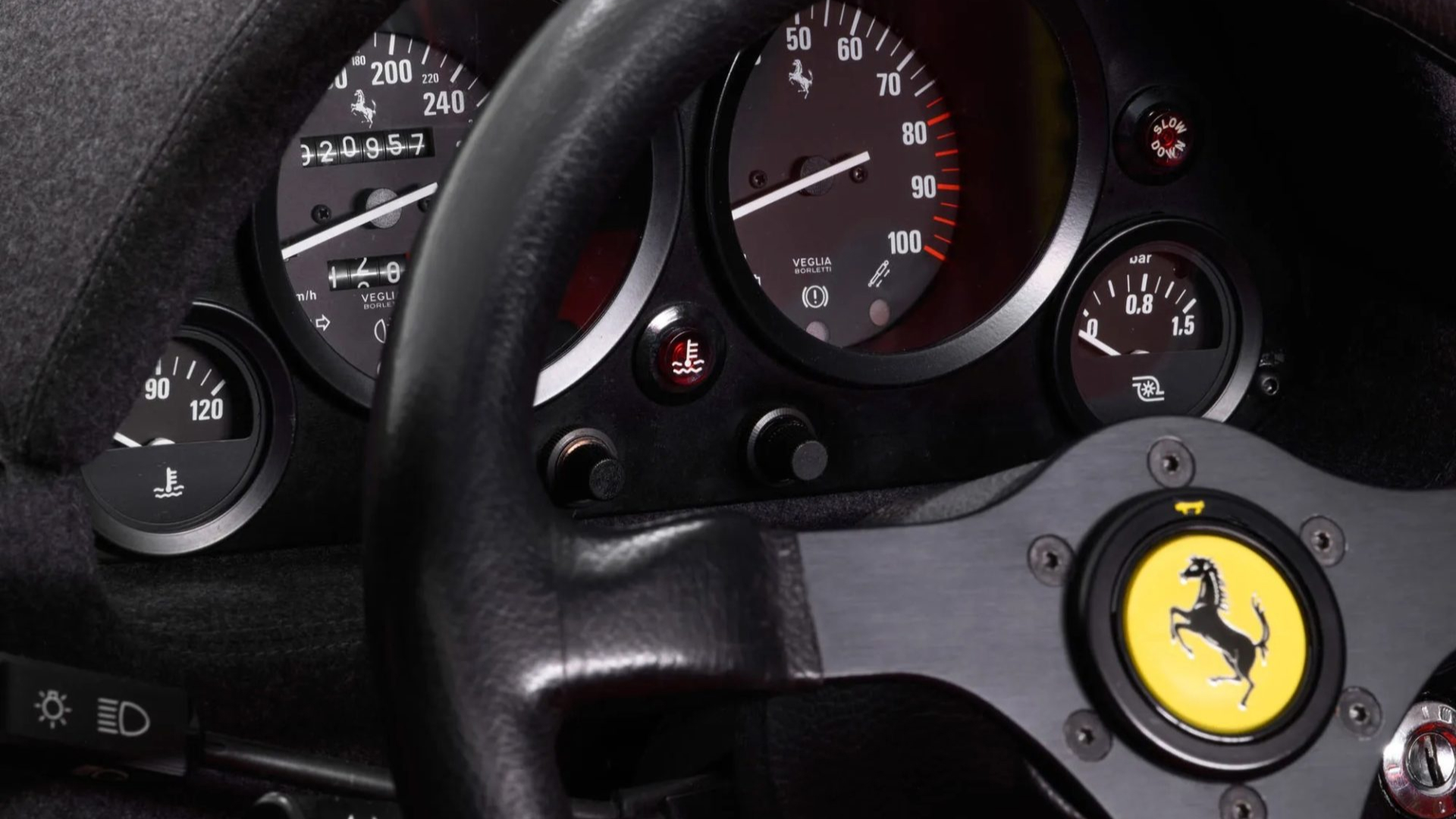
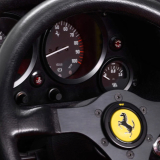
Minimalist racing dashboard
Analog gauges, exposed mechanical elements and minimal leather trim keep the cabin focused on driving rather than comfort.